Showing posts with label Garden. Show all posts

Friday, June 29, 2012

Easy Brined Dill Pickles..

The problem: You're growing cucumbers for pickling, and they are getting to proper size one or two at a time, but all the recipes you find are for a big batch. You keep putting them in the fridge and they are wilted by the time you have enough saved up for a recipe's worth.

The solution: Use this recipe for one jar at a time pickle production. 

1. Make a brine- I'm using 2T of kosher salt for every cup water. Try it and if they come out too salty, adjust. Go ahead and make too much (like a 4 or 5X recipe), you'll use the rest on another day.

2. Wash your cucumbers, remove the prickles as you do.. 

3. I like to slice mine into 'spears' first. They will pickle faster, and I seem to have better luck fitting them in the jar. 

4. In a clean jar place the cucumber spears, a smashed garlic clove, a sprig of fresh dill, and a sprinkling of red pepper flakes (or fresh pepper if you like). Pour in the brine. 

5. Cover the jar with something that breathes and a rubber band- keep it at room temp but not direct sun for about 3 days. 

6. Put your lid on and put them in the fridge. If your pickles are too salty, you can dump some water and replace with fresh water. Excess salt will leach out into the water.


Feel free to add onion, green tomato, etc; whatever else the garden is putting out in excess. Here is a fresh prepared batch sitting out. Notice the color difference in the new brine. As it matures it will become 'milky' in appearance.


Peach Cobbler

We planted a tiny little 3 foot peach tree last year, and it is a champ! As spring started it was making so many little peaches that I worried all its limbs would break under the weight. We knocked about 2/3's of the little peaches off the branches, and we've still gotten about 25 beautiful ripe peaches from it.

So what to make with them? I'm a little hesitant to make anything, as I'm just crazy for ripe peaches. It almost seems a waste to eat them any other way. Finally yesterday (after eating them for about a three days) I had my fill and decided to start with a cobbler.

If you saw my olallieberry cobbler post, you are probably getting the theme, but I LOVE cobblers. So much easier than pie, and I prefer that sweet biscuity cake in the mix to pie dough. It's nice when your preference is also easy.

If you are local and want some good peaches, there is a little fruit stand on the 118 that has great peaches coming soon, if they aren't there already. Can't remember the name, but I go there every summer and will be again once these last 9 peaches are gone!

I used this recipe, and totally recommend it. http://allrecipes.com/recipe/southern-peach-cobbler-2/

I recommend staying clear of any cobbler recipe that doesn't have butter (cut in method) in the 'cake' portion of the recipe.

Here are the pictures. As always, nothing cooked with fruit looks as appetizing as the fruit itself, but believe me, this is GOOD!


Saturday, June 2, 2012

Cobbler

Olallieberries are coming in. Besides the artichokes, there isn't anything in the garden that fits my "all thumbs" gardening style so well. Plant it, walk away, and return when it's time to harvest. This years bunch is going to be about five times what we picked last year. Our first pick went to a cobbler.

Nothing more to say here. Behold...


Wednesday, April 4, 2012

Tobacco

     We've always said that if we could sum up our gardening philosophy, it could be done in one word: Pragmatic. We have always tried to grow the things that we like to eat, but more specifically things that we like to eat from one or two categories. The categories are either A) something we like to eat that has WAY better flavor from the garden than bought in the store (tomatoes, melons, brussels, etc), or B) something we like to eat that is ridiculously expensive when bought at the store (artichokes, berries, avocados, someday maybe asparagus). If the product falls into both categories, as many do, even better! I've broken this rule from time to time, just to try a certain bean, or some sweet corn, or potatoes, and have NOT been rewarded for the effort. Ironically I either have the hardest time with these- because of pests or some other factor I don't know about, or I just wind up with such a small harvest of staples that the math just doesn't work. Beans, for instance, are cheap and plentiful in the store if you know how to cook dried beans. Fresh corn, I only want seasonally and the farmer's market hooks it up just fine. One of our funniest gardening mishaps was planting a whole bag of cranberry beans, only to harvest about half of the number that I actually put into the ground- we got a kick out of that.

     Well, lately we've been smoking again. Not a crazy amount, just usually buying a pack or two whenever we knew we'd be out drinking and chatting with friends. Initially because we felt bad for constantly bumming theirs. Friends are generally kind, and that's why we all like them- but I know the price of smokes, so we have decided to start picking up the odd pack on the way to the BBQs.

     Now according to the finest source of quality information that one can turn to these days, (Yahoo answers of course) there are .8 grams of tobacco in a cigarette. Assuming this is true, that means there are 16 grams of tobacco in a pack of cigarettes, which converts to a little more than HALF of one ounce of tobacco, actually that's 0.56438 of an ounce the way I've rounded it. At $7 a pack in CA, that comes to a little less then $14 an ounce- or the number that will really shock you: $224.00 a pound for tobacco.

Can you imagine this exchange at the grocery store?

You: "Hello, these tomatoes look beautiful, how much are you charging for them?"
Grocer: "Oh, those are going for $224 per pound."
You: "I see! Well, that sounds like it should be a pretty good amount of tomatoes then, and I'm sure they must be really good for me."
Grocer: "Sorry, no. That will only get you 3-4, depending on the size you pick. As far as being good for you; if you look here at the sticker on them, you'll see that there is a good chance that if you don't quit buying and consuming them, they will kill you."
You: "Hmm.. That really sounds terrible. I'll bet they're the best tasting tomatoes that I've ever had at least."
Grocer: "Wrong again friend. Even as carcinogenic tomatoes go, these are among the worst in history. See, the carcinogenic tomato industry is organized in such a way that there are really only 6 companies in the country. [Info sourced from answers.com, clearly the only source of info that is arguably more reliable that yahoo answers] They are producing much the same product, like the beer industry used to do. Unfortunately, there is very little hope that we can expect an micro/flavor-centric movement with carcinogenic tomatoes, since the regulation involved pretty much keeps little guys out of the game. Anyway, even at their best this product is likely to make you stink and be shamed and excluded publicly. At the worst (and these certainly fit the bill!) they are filled with a crazy list of dangerous additives on top of their naturally occurring carcinogens."
You: "So then why the heck would anybody buy them?"
Grocer: "That's the catch. They are horribly addictive!"
You: "Ok, well I'm not dissuaded, how much will seven dollars get me?"
<The grocer cuts a teeny tiny sliver.>

NOTE: The preachier elements of the above exchange are truly meant to dissuade you from smoking at all.  That was the token effort on my behalf, but I'm done with that now- moving on.

     You may think that the above imaginary conversation was inspired by Homer Simpson's "Tomacco", but in fact I chose the tomato analogy because by all accounts, growing tobacco is very similar in process to growing tomatoes. They like similar soil, need to be fertilized similarly, and have many of the same pests (ok, their hornworm has a different kind of stripage- big difference). As a gardener who is "All Thumbs" (even if they are green) I can vouch for the ease of tomato growing.

     But what can you expect to yield from growing your own tobacco? According to a very wise-sounding cartoon gentleman in a Mexican wrestling mask (on Yahoo answers- google any question, it's amazing!), you can get about 3-4 cartons of smokes from one plant. At $7 a pack, that's about $180- $240 saved per plant grown.

     Even for as little as we buy tobacco, there is certainly no agricultural product that we buy that is more expensive (and with that, you can extrapolate all sorts of useful information about my personal habits), so it makes sense that we would try and grow it! Heck, I'm even fond of rolling my own cigarettes when I smoke, so no down-side there.
     Seeds are readily available online, and legal to buy. Tobacco is legal to grow for personal consumption in all 50 states- but don't even think of trying to sell it or you could have the ATF knocking on your door. Not even plant starts can be sold, from what I understand.

     The seeds of tobacco are tiny- almost a dust in the little bag that you will buy, but they will sprout way more plants than you will likely need to grow. I probably have about a hundred tiny starts now in my little starting flat. The seeds should be dusting over a wet starting medium, and not buried at all. Mist the medium daily if it looks dry, and you will see little plants in a couple of days to a couple of weeks. Mine took almost three weeks before I saw any tiny plants. They should stay indoors till they are big enough to transplant: 2-3 inches at least.

     Tobacco leaves will ripen from the bottom up (so I've read) and you'll want to cut off whole leaves as they start to wilt and turn yellow. Sew a bit of twine through the stem of all harvested leaves- leave some space between each one and hang them up somewhere in the shade where air circulates. When they have dried they will be ready to smoke. If you want, you can build a makeshift humidor to cure them in for more (or more particular?) flavors. I will likely not do so, just keeping it simple instead.
Save one plant for seed, all flowers will sprout at the top and can be bagged if you want to make sure the strain is pure- flowers are self pollinating.

I'll put some pictures up soon, smoke 'em if you got 'em.

Saturday, December 17, 2011

Sunday, July 24, 2011

State of the Garden Address- Summer 2011


         I'm sitting outside this Sunday, drinking sangria with Jen, and looking out on the garden in summer. I have decided to kill two birds with one stone, and write both my final speech for class, AND a long overdue blog post (if you can't hear my voice, then you're reading this there). Nothing like getting homework done while I document what worked well and what didn't, in the backyard farm for this year. 
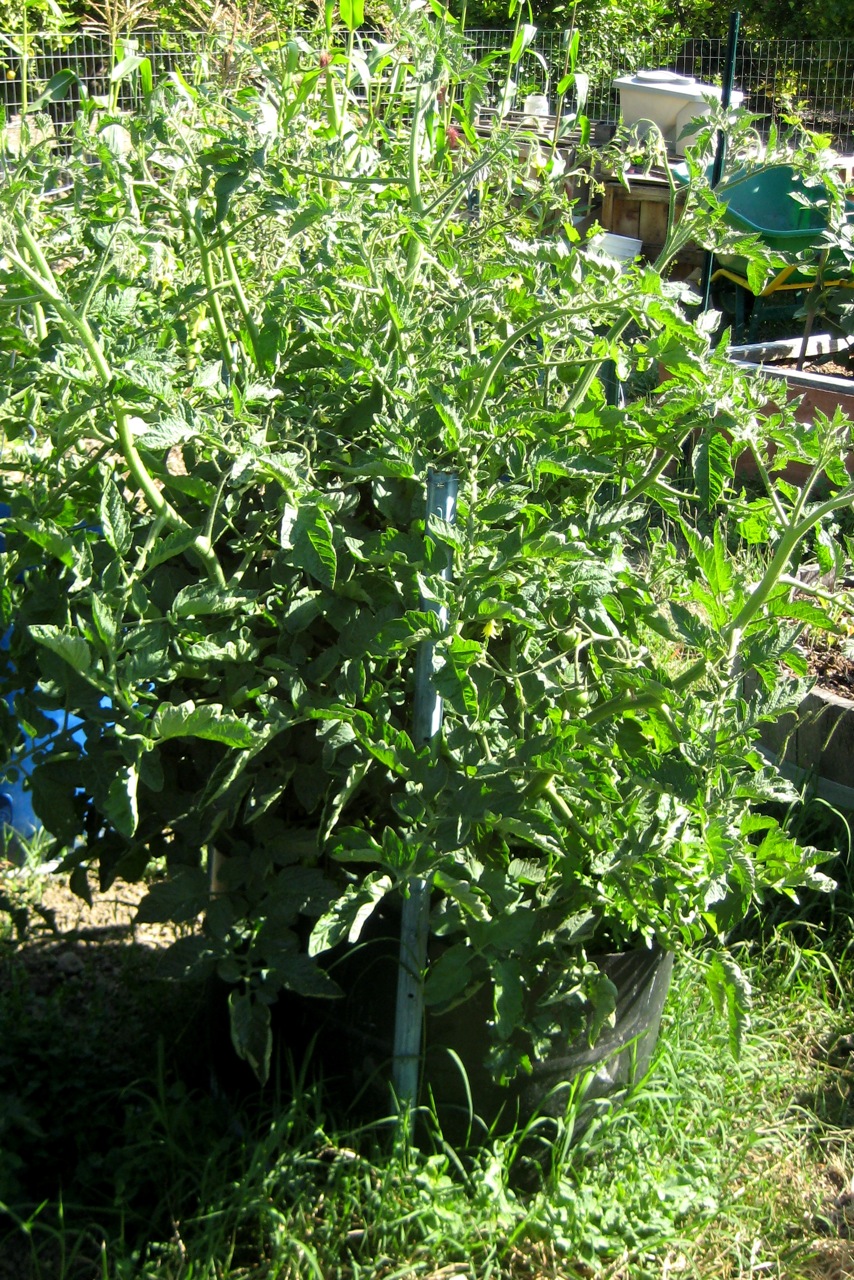
        To talk about the garden in the middle of summer, is like talking about tomatoes, cucumbers, peppers, melons, and squash. The good and the bad, that's about it. I think I'll start with tomatoes. Our tomatoes this year were kind of a sad thing. We have gotten quite a few (mostly "black prince" and "garden peach"), but really not enough for all that we planted. The saddest failure was our "Cherokee purple" which is currently one single though very large tomato at the center of the plant, while every week a new bunch of little yellow flowers dry up and fall off. Leaves are turning brown and wilting inward, but not for a lack of water for sure. I think I'm either overwatering, or the half barrel it's planted in is not draining well, or the soil is infected from last years tomato planting with some tomato specific disease. I've looked up "blossom fall" online and causes run the whole gamut. Too much water, too little water, disease, too much nitrogen, too little nitrogen. They could have just said, "If it's not one thing, it's another" and left it at that. I'll probably just not plant tomatoes in this spot next year, and see if that helps.
        Anyway, we are not lacking in tomatoes, by any means, but after planting 10 plants, I thought for sure we'd be in canning madness right now, but there is only enough to eat fresh. We are getting lots of fresh salsa and pasta primavera however, so that's nothing to complain about. 
        Cucumbers are keeping us busy on the other hand. We planted Mexican sour gherkins- (I'm told they look like little watermelons, but I'll have to take people's word for that- none came up) and Armenian cucumbers which are always very prolific for us. Last night, I stayed up late canning about 10 jars of our cucumber ketchup, and Jen has already put up about 15 quarts of pickles (two different kinds). Even with all that, we still have lots left over to eat or can. It's so overwhelming, I actually decided to pull the plants yesterday to make room for the strawberries that were not doing to well in their little pots. Those Mara des Bois strawberries are one thing I really wouldn't mind having too many of. 
        The little 'Sugar' pumpkins are doing very well under the dappled shade of the sunflowers. Looks like about 12 pumpkins there in various stages, so we should have plenty for pies this Thanksgiving and Christmas. The Butternut squash looks even better under the shade of the corn we planted. We'll have lots to cut up and freeze, but the corn is so full of worms it's really only good for chicken treats (they prefer corn WITH worms after all). They will also get the sunflowers when the heads are ready, so they should be eating really well soon! Anyway, sometimes you win, sometimes you lose. I'd rather have squash than corn any day. 
        Our little yellow crook-necked summer squash was a pretty nice change this year. Not overly abundant, but after the zuchinnis from last year they were just right. I think even the chickens were tired of zuchinni even before summer started. They really are a psychotic producer. I don't think I'll ever grow them again, unless we start baking with it, I'm not crazy about it otherwise. Anyway, the yellow squash was just right, and perfectly sized for adding to another recipe without changing it too much. 
        We planted Crenshaw melons this year, and they are really a great melon. The flesh is somewhat like a cantaloupe, but softer and juicier than I'm used to them from the store. Even near the rind they have an interesting flavor- sort of tangy and salty as they turn green, which is like a nice flavor to counter the sweetness in the softer flesh. My new favorite melon! The plants still have about 12 more coming, and we've only had three so far. Chickens get the guts and seeds from them, and they get to pick at the rinds. I don't think they like anything more, except maybe cucumbers (which are a melon themselves) and of course their black soldier fly larvae.
        Our favorite new plantings this year were the artichokes and the olallieberries. The artichokes were not so good in the 'leaves' like the store bought globes are, but they had the most amazing hearts and they produce about as much as anyone can eat. I just chopped it down two weeks ago (from a 7 foot plant that was covered in aphids) because I thought it was about done for the season- but it has since come back. It's only about two and half feet tall, but already has about 23 little artichokes on it again. I have to say, for all that it's done for us we haven't done anything but neglect the poor thing. It may be- in my opinion- the singly most adapted plant to our weather and soil than anything else we have here. 
        As for the olallieberries, they are my new favorite berry for sure. More productive this year than our raspberries but all at once, whereas the raspberries seemed to come little by little from about the middle of spring till even now. The olallieberries were huge and tart- probably really good as a jam or pie, but we ate them fresh in big bowls topped with a little sugar, and unsweetened whipped cream. I think we ate pretty much the whole batch at one sitting! They have a very complex flavor, but the tartness does call for a little sugar. The plant is sending out runners now that the fruit is gone, and it seems to want to take over the whole garden. I like these so much that aside from guiding the canes where I want them, I think I will just let them go. I will need to find whether there is any benefit in trimming them (production wise). But it's already at least 5 times bigger than it was when it fruited, so next spring should be really good for berries. 
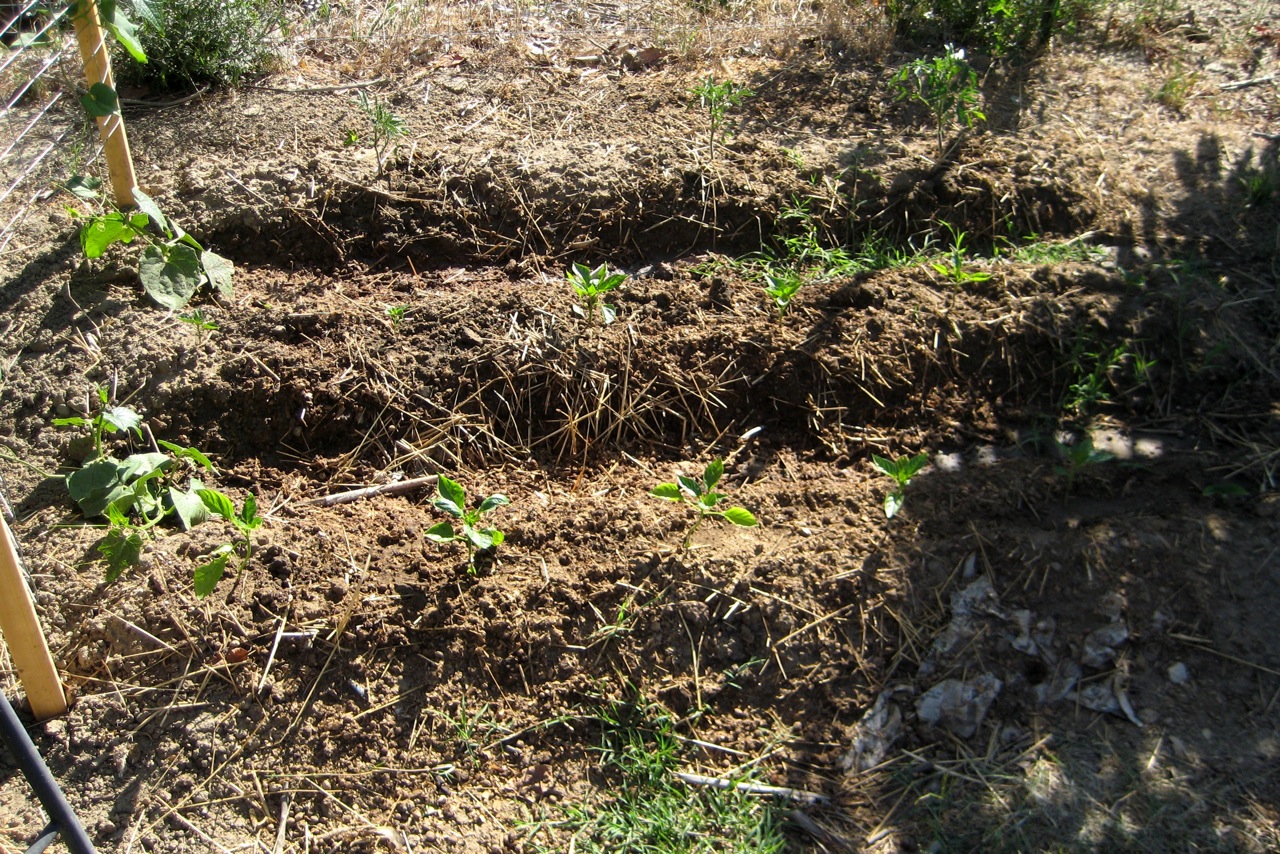
        Santa Fe and Jalepeno peppers are doing well, but the peppers are mostly still growing. We planted two 'late' rows of bell pepper which might make it to fruit by the time fall comes around, or might not. I think they will be fine depending on how cool our fall is. 
        Every pea and bean plant we started did miserably. The best were the favas- but the pintos, cranberry beans, and sweet peas I think gave me less actual beans/ peas than I even put in the dirt. I don't know if our soil is not right, or if they just want more water than I gave them, or maybe deeper roots than most of out pots allow (they are about 27 gallons though). Anyway, they are cheap at the store, so I'm not too worried about that. 
        The strawberries have done well, though I cut off most flowers before they fruited. I'm interested in seeing them spread out with more runners rather than produce a lot of fruit. Next spring should be great for them, we actually got a few and they were delicious! Commercial berries don't even come close to these! Smaller and less watery- really rich in scent and way more sweet. People say that commercial berries are bred to be pretty, but they aren't even as good looking as these little berries. They finish so red that they are almost purple. The main difference I can see is that commercial berries are just big. They are definitely justifying my initial purchase of 50 bare root plants. 
        Tomatillos were really weak for us. We had tiny cherry sized fruit, but lots of it. They tasted great, and we made some good salsa from them, but not even quite one single jar. Meanwhile on the neighbors side of the ditch, three giant tomatillo plants have sprung up out of nowhere. I think an overripe fruit probably got smashed or thrown there in an earlier year, because they have some very neat rows planted but these plants are just growing in the ditch. I admit it's taken every ounce of my strength not to go pick them some night, in fact the only thing that's stopped me is that clearly someone has been watering them, in which case they are more than just a fortunate weed. 
        The trees are doing very well, but no thanks to us. I think our rain has been the best thing for them as we had lots this year. We ignored them completely, other than fertilizing one time, and always dumping the lawn clippings around the trunks to keep back weeds. Our Haas avocados were plentiful, if a little bit small, but the bacons were huge as always. The tree is so big that we can't pick them however, so we just wait for the wind or a bird to knock them down. They soften up much faster when they've fallen too (it seems) so we really get them the best they can be in this way. 
        Our oranges were pretty seriously raided by the rats, but those we did get were the highest quality I've ever eaten. Just really sweet and juicy- they cannot be peeled without losing juice all over the place. So sweet that you almost can't taste any acid. I think I've been trained in the past by grocery store oranges, so we've always picked them too early. This year I didn't even think about them till the rats ate up a bunch. I think in future years, I'll just wait for the rats to tell me when they are ready. 
        Our mulberry tree is still really young, no fruit yet- though it has been growing well. The Turkish brown fig is doing really well. Growing and producing about 15 a year- even while only about 3 feet high. They take a while to ripen, but they are well worth it.  Our Mexican lime looks pretty runty actually, I keep picking it's flowers as soon as they appear. I think this one will actually need some care from us- unlike all the others. 
        The peaches are just plain sick. Fungus every year now, even on the new one that we just planted. This is the only plant where I think we'll be breaking our quasi- organic principles and spraying with copper next spring as soon as we see buds appear. It may sound bad, but I think principles are worthless if you don't test them, and peaches anyway are freakin' good. So yeah, that's that. In the meantime, the chickens can appreciate the tiny mealy moldy peaches that fall off the branches, even if I cannot. 

        Chickens are doing well. We get enough eggs to eat and sell enough more to feed both the chickens and the rabbits for free. Our second generation of birds are bigger (in numbers) than the first, so it should be even better when they start laying. I probably have twice as many birds now as the carrying capacity of the yard can handle, but I want to see who are the good layers before I sell or slaughter any. 
        The rabbits have given us one litter of 6 kits, with a second on the way. We started out with mini rex rabbits, but we are breeding out the "mini" gene over time, since we are after large litters of meaty rabbits. Unfortunately standard rex aren't as easy to find around here. I'm thinking we'll end up with a medium sized rabbit, and in fact we're seeing some progress on that already. 
      
        All in all, I'm happy to report the state of the garden is good, and we look forward now to fall: collard greens, cabbages and broccoli. Hopefully we'll have lots of homemade kimchi by Christmas time. 

That is all. 
        

Saturday, June 25, 2011

Garden Progression


Artichokes doing very well! Couldn't ever tire of these.


Last of the beets..


Just two chard left


Collards just starting out


Corn squash and beans


Crenshaw melon


Crenshaw melon patch (with some strawberries)


Crook neck squash


Armenian cucumbers


Epazote just about going to seed. Got lots dried in the pantry.


Turkish brown fig


Grapes (cabernet)


Herbs- French thyme, cinnamon basil, pineapple sage, lemon verbena, italian basil


Olallieberries almost done for the year I think. 


Onions and leeks


Raspberries


Santa Fe and Jalepeno peppers


Mara de bois strawberries, thyme on top.


Sugar pumpkins and sunflower


Tomatillos


And now all the tomatoes

1. Black from Tula


2. Black Prince


This great green mass is 
3. Garden Peach


4. Green Zebra


5. Purple Cherokee


Late starts:

6. Nyagous (another black tomato)


Back row- Nyagous tomato
Other 2 rows- Bell Pepper
Between rows- Chayote squash


The girls sitting in the shade


The new ones- Black/ Copper Marans


Dahlia!


And Jax.


Friday, May 27, 2011

Morels

Early this month, my brother and I (OK mostly my brother- hah!) were digging out a drainage ditch here at the house. It is an old concrete ditch about 4 foot deep, but over the years it has filled up with leaves almost to the top. Frank (my brother) wanted to take some of this old leaf mould back to his garden, and we wanted the ditch emptied out, so it seemed like a pretty good arrangement.

While he was digging however he came across this mushroom which I thought I recognized immediately.


Well, I looked at a guide to identification for them, and it seems that it really is a morel; Probably a yellow morel. From what I've read, only the 'false morel' is close in appearance, and it is easy to differentiate because it isn't hollow. This mushroom was hollow through both the stem and the cap. In fact, the cap even had a hole in the top- though I think it may have been broken a little.

We didn't eat it however, because of the difference between sure and pretty sure- and because you never know with the internet. As one website advised, "You can actually eat ANY mushroom, it's just that some can only be eaten once." (paraphrased and can't remember where I read it- sorry to not credit..)

Anyway, this has really been on my mind this morning. Wouldn't that just be amazing if I could encourage my own little wild mushroom patch here? And MORELS no less. I could only be happier with truffles!

I have some emails out to experts on morels, hopefully I can get some more info on this.

If you know something about wild mushrooms please chime in or drop me a line. In the meantime I'm going to tag this post with Wildlife, and optimistically with Garden- let's see if we can make that a reality.


Sunday, May 22, 2011

Progression photos, main garden

No bla bla blahs this time. Just some pictures that speak for themselves. Look at everything grow!


               Three Sisters planting- Silverqueen Corn, Butternut Squash, and Pinto Beans


 Artichokes are blowing up! Been eating about 4 a day for the past week, and look at all those new ones coming in.. I'm not complaining.


                                       Crook-Neck squash


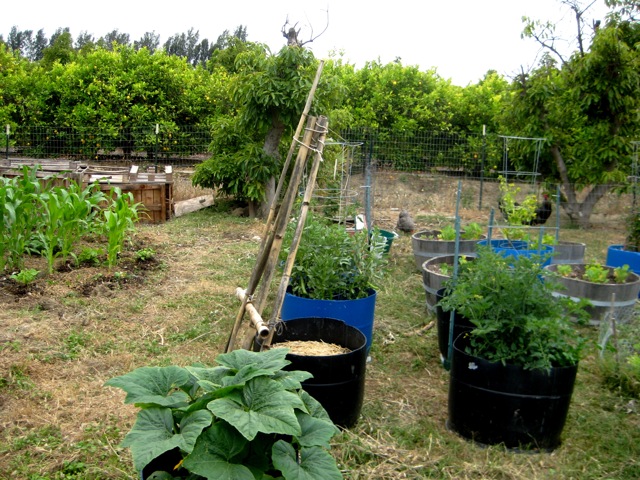
A few shots of the whole garden


              I can't wait for the Olallieberries!


Pullets and cockerals are growing fast. It looks like I will have some rumpless birds here, like their dad.  You can see how some have tail feathers coming in, others don't appear to.


These are our two favorites- Hope they are hens!


              Tomatoes


          And a pea flower..


Finally, a couple pictures of a newly started batch of compost. We put it together yesterday and look how it's cooking. Mostly coffee grounds on top here..